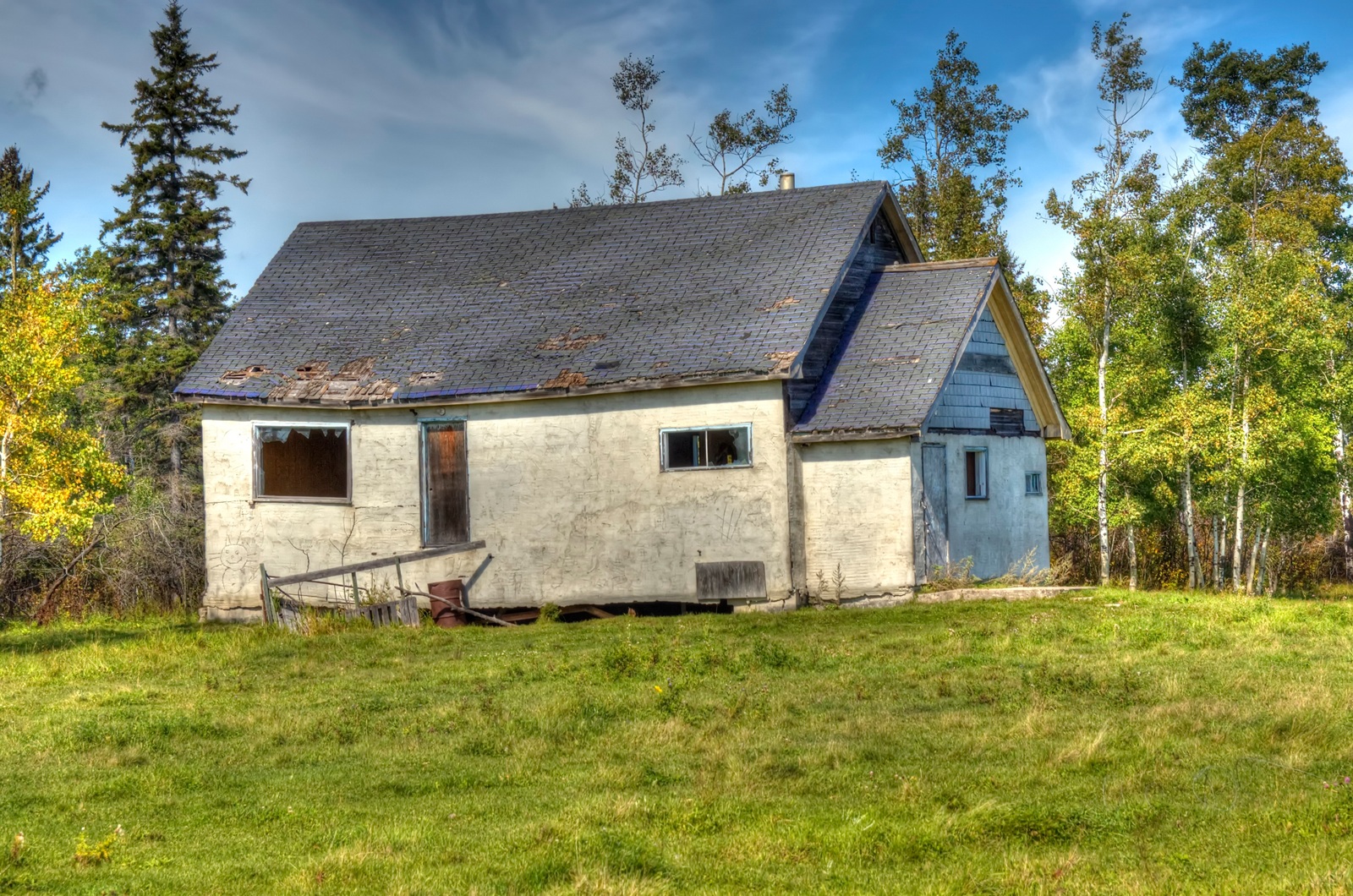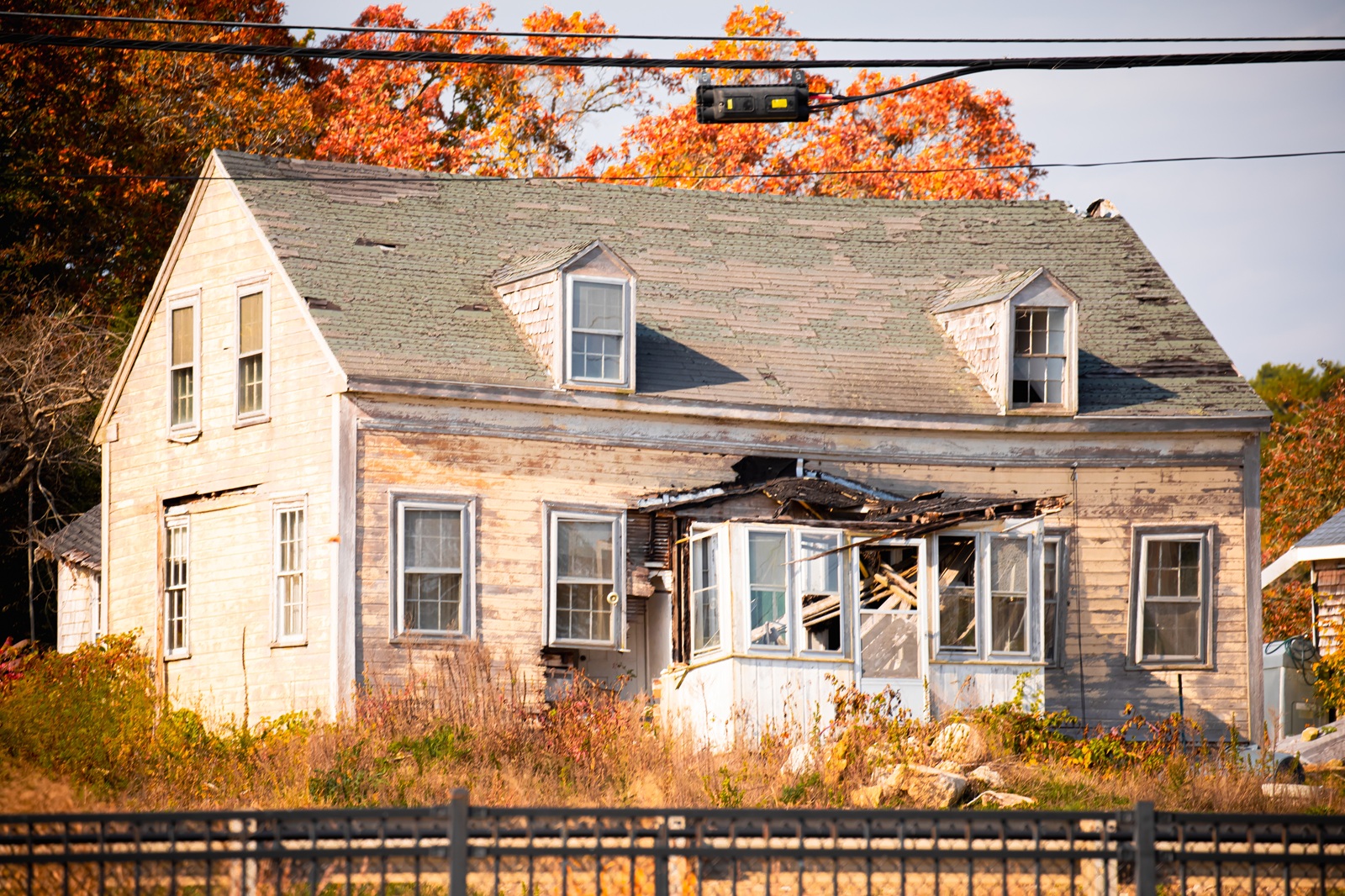
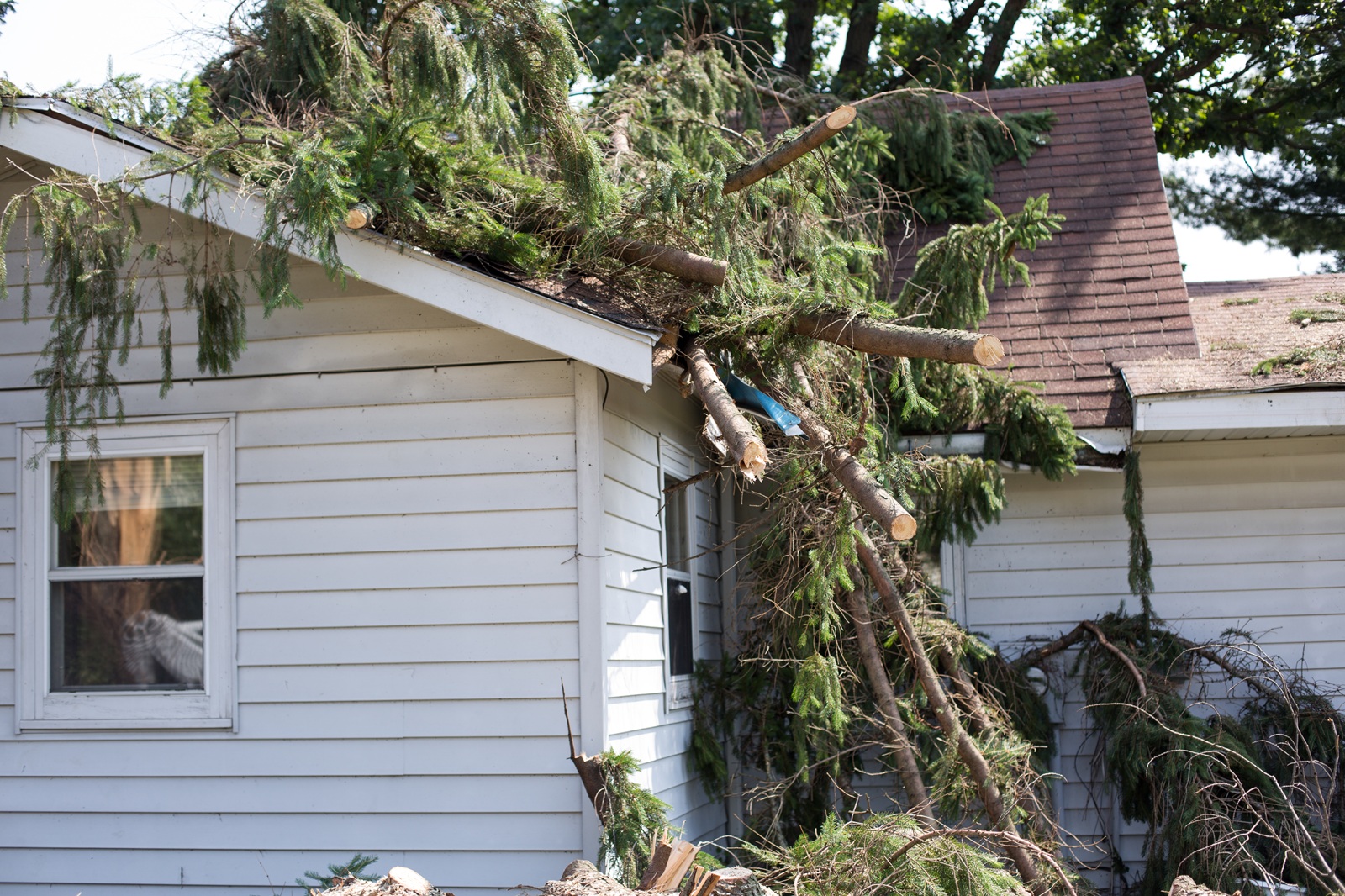
Northeast Florida is no stranger to tropical storms and hurricanes, and Jacksonville homeowners who have been through a significant storm event know the aftermath can be more grueling than the storm itself. Adjuster disputes, hurricane deductibles that are far larger than standard deductibles, contractor delays, incomplete repairs that stretch across multiple seasons, and the weight of carrying an unlivable or partially repaired home while navigating all of it, this is the situation that drives many NE Florida homeowners to consider selling rather than staying through a restoration project that has no clear end date.
This guide is specifically about hurricane and tropical storm wind damage, which is handled differently from flood damage under most Florida homeowners insurance policies. Flood damage is covered under a separate National Flood Insurance Program policy or private flood policy. Wind damage from a named storm is covered (or disputed) under your standard homeowners insurance policy, but with a hurricane deductible that works very differently from your standard deductible. Understanding the distinction matters for your decision about whether to rebuild or sell.
How Hurricane Deductibles Work in Florida
Florida homeowners insurance policies are required to include a separate hurricane deductible for damage caused by a named tropical storm or hurricane. Unlike a standard deductible of a fixed dollar amount, hurricane deductibles in Florida are almost always expressed as a percentage of the home’s insured value. Common percentages are 2 percent, 5 percent, and 10 percent, though some policies carry even higher hurricane deductibles.
On a home insured for $300,000, a 5 percent hurricane deductible means the homeowner is responsible for the first $15,000 of storm damage before insurance pays anything. A 10 percent deductible on the same home means the homeowner owes $30,000 before coverage kicks in. For homeowners who purchased their coverage when their home was worth less, and whose insured value has not kept up with appreciation, the deductible amount can represent a significant financial exposure they were not expecting.
This deductible structure is one of the primary reasons hurricane-damaged homeowners in Northeast Florida end up in a situation where insurance covers some but not all of the restoration cost, leaving a gap the homeowner must fund personally. When the gap is large and the homeowner does not have the capital to fund it, the project either stalls or the homeowner concludes that selling is a more rational outcome than staying.
Northeast Florida’s Hurricane History and the Homes Most Vulnerable
Jacksonville and the surrounding Northeast Florida region is not the highest-risk area on the Florida peninsula for direct hurricane landfalls, but the region has experienced significant impacts from multiple storms. Hurricane Matthew in 2016 caused extensive flooding along the St. Johns River and significant wind damage to properties throughout Duval and Clay counties. Hurricane Irma in 2017 produced wind damage and flooding across the region. Hurricane Ian in 2022, though it made landfall far to the south in Lee County, generated tropical storm conditions and flooding across Northeast Florida as it moved inland.
The homes most vulnerable to wind damage in this region share certain characteristics. Older roof systems with dimensional shingles approaching or past their rated lifespan are the most common failure point. Homes with large overhangs, complex roof geometries, or older construction that predates current Florida Building Code wind resistance requirements are more susceptible to significant damage in sustained tropical storm winds. Coastal properties and those in areas with fewer wind breaks face higher exposure than those in forested or buffered interior neighborhoods.
The Most Common Wind Damage Situations We See
Roof Damage Without Full Insurance Coverage
The most common situation is a roof that sustained damage in a named storm, the homeowner filed a claim, and the insurer offered a settlement that covered partial replacement or repair, but not the full scope of what was actually needed. The homeowner accepted the partial payment, had some work done, and now has a partially repaired or patched roof that a home inspector will flag and that a buyer’s lender will require to be fully addressed. Selling this home on the MLS leads to inspection contingencies, lender requirements, and price reductions.
Insurance Claim Disputes and Denied Claims
Florida’s property insurance market has undergone significant turbulence in recent years, with multiple carriers exiting the market, others significantly restricting coverage, and the resulting pressure on Citizens Property Insurance Corporation. Homeowners who filed hurricane claims found that the claims process was more contentious than expected, with insurers disputing the cause of damage, invoking wear and tear exclusions, or using their own preferred contractors whose estimates came in far below independent contractor estimates.
A homeowner with a disputed or partially denied claim faces the additional complexity of potentially pursuing an assignment of benefits or hiring a public adjuster to reopen and re-adjudicate the claim, while simultaneously carrying a damaged property. Selling as-is, with the open claim addressed through assignment at closing, is often the cleaner path.
Incomplete Restoration After Partial Funding
Insurance funds were released, contractors were hired, work began, and then something interrupted the process. The contractor went out of business, ran out of materials during a post-storm shortage, had a dispute with the homeowner, or simply never finished the job. The home is now in a partially repaired state that is worse in some ways than the original storm damage because there are exposed materials, incomplete systems, and permit issues from started-but-not-finished work.
Incomplete restoration properties are among the most difficult to sell conventionally. Lenders will not finance them, inspectors flag the incomplete work, and buyers are uncertain about what is behind the walls. We buy homes in mid-restoration condition, as-is, and assume the responsibility of completing the project after closing.
How We Handle Open Insurance Claims at Closing
An open insurance claim does not prevent a sale. At closing, the claim can be assigned to the buyer through an Assignment of Benefits (AOB) agreement, or it can be structured in other ways depending on where the claim stands. The title company coordinates the assignment as part of the closing documentation. You do not need to close or resolve the claim before selling.
Florida’s Assignment of Benefits laws for property insurance have been subject to legislative changes in recent years. As of the most recent legislative session, the AOB mechanism for property claims has been subject to new restrictions designed to reduce litigation abuse. The specific structure of how your claim is transferred will be handled by the title company in coordination with the insurer. Andrew has navigated this process in multiple post-storm transactions.
Why Selling After a Storm Can Make More Financial Sense Than Rebuilding
The calculus is different for every homeowner, but several factors consistently favor selling over rebuilding after a significant storm event. The first is carrying costs. A home that is uninhabitable or partially repaired is not generating the use value of a primary residence and may be costing more to insure than an occupied home while producing none of the benefit. Every month of carrying costs while the insurance dispute and contractor delays drag on is money that does not come back.
The second factor is the insurance market itself. A home that has sustained significant storm damage and had a claim paid may face materially higher premiums at renewal, or may lose its current carrier entirely, requiring placement in the Citizens Property Insurance pool or with a non-standard carrier at higher cost. Selling eliminates that ongoing insurance cost uncertainty.
The third is the personal toll. Managing a major restoration project while also managing normal life responsibilities is a significant burden that some homeowners reach their limit for. The certainty of a cash sale, a defined closing date, and the ability to move on without managing contractors and insurance adjusters for another year or two has real value that does not show up on a spreadsheet comparison.
Frequently Asked Questions
What is the difference between hurricane deductibles and standard deductibles in Florida?
A standard deductible is a fixed dollar amount (e.g., $1,000 or $2,500). A hurricane deductible in Florida is almost always a percentage of the home’s insured value (commonly 2 percent or 5 percent). On a home insured for $350,000, a 5 percent hurricane deductible means you pay the first $17,500 out of pocket before insurance covers the rest. This percentage deductible is triggered by damage from any named tropical storm or hurricane.
I have an open insurance claim from Hurricane Matthew or Irma. Can I still sell?
Yes. Open claims from prior storms, including ones that are years old and still in dispute, can be addressed at closing through an assignment of the claim to the buyer. The title company handles this as part of the closing documentation. You do not need to resolve the claim before selling to us.
The roof was partially replaced after the storm but not fully. Will that be a problem?
Not for us. We buy homes with partially completed repairs as-is and evaluate the scope of what remains. This is a common situation after storm events where contractor availability was limited and work was done in stages. We account for the completion cost in our offer and handle the remaining work after closing.
My insurance company denied part of my claim. Do I have any options other than litigation?
You may have options through a public adjuster, who can review the denial and potentially reopen the claim on your behalf, or through the Florida Department of Insurance if you believe the denial was improper. However, these processes take time. If you are ready to exit the property rather than fight the insurer, selling to us as-is with the claim situation fully disclosed is the faster path.
Is wind damage covered under my regular homeowners policy or does it require separate coverage?
Wind damage from a named hurricane or tropical storm is covered under your standard Florida homeowners policy, subject to the hurricane deductible. Flood damage is a separate coverage requiring a separate NFIP or private flood insurance policy. Many homeowners discover after a storm that what they thought was insured under their homeowners policy was actually flood damage not covered without a flood policy, or vice versa.
Can I sell a home that is currently uninhabitable due to storm damage in Jacksonville?
Yes. We buy uninhabitable properties as-is throughout Northeast Florida. The uninhabitable status does not prevent a cash sale; it only eliminates conventional buyers who need mortgage financing. One walkthrough, a written offer, and a cash closing in 2 to 4 weeks.
Storm Damage Does Not Have to Mean Years of Rebuilding. Call Andrew at 904-773-7355 for a Cash Offer on Your Hurricane-Damaged Home.
About the Author
Andrew Nebesnyk
Andrew is a Jacksonville real estate investor with a construction background who has personally closed 300+ transactions across Northeast Florida. He writes about selling houses, local market trends, and the life situations that lead homeowners to sell.